Injured in a St. Louis Car Crash? Your Rights in the First 72 Hours
The first 72 hours after a car crash determine whether critical evidence survives or disappears. Here is what Missouri law gives you the right to do — and what the insurance company hopes you will not.
By Joseph Ott
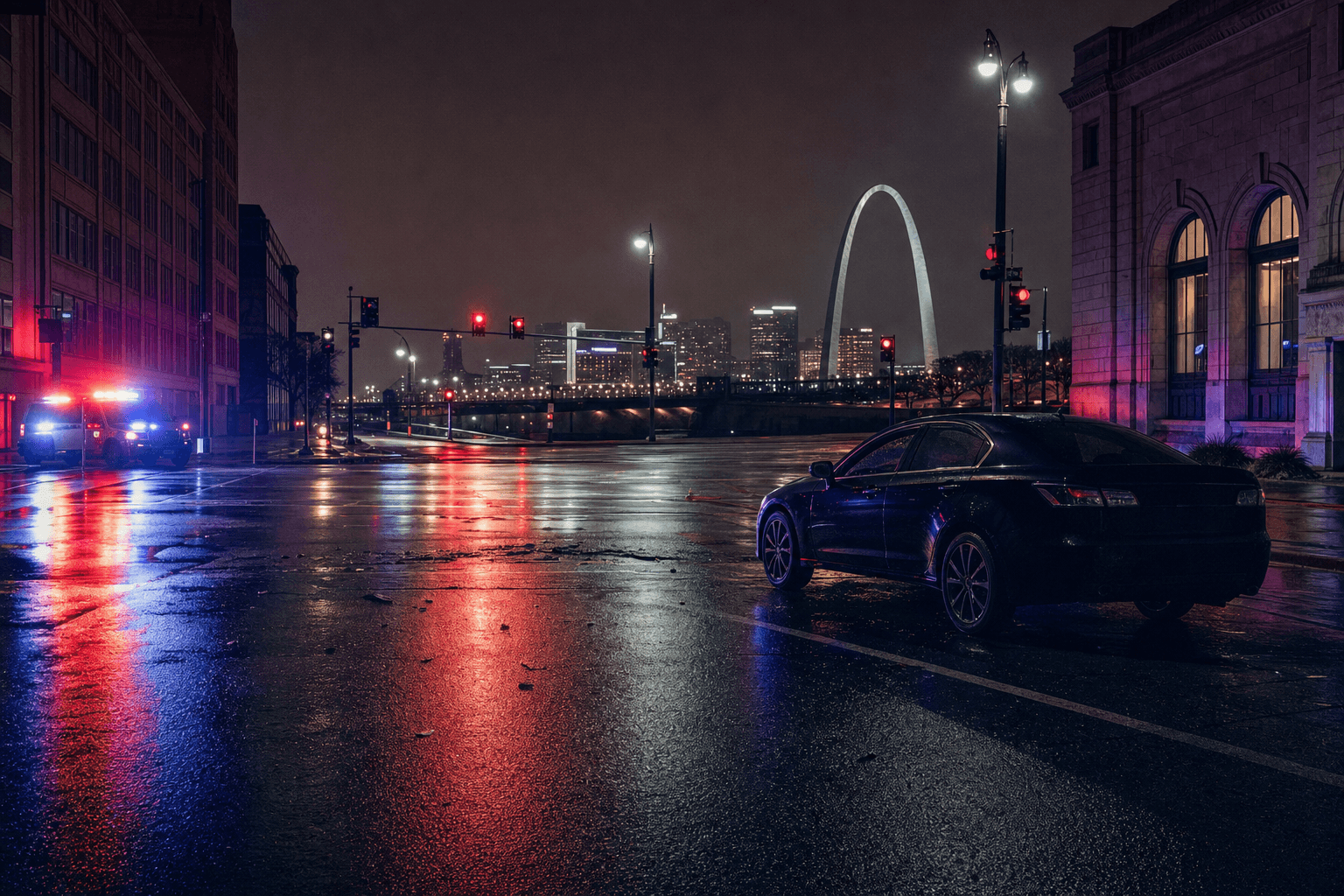
The insurance adjuster called before you left the emergency room. Friendly voice. A few questions. Maybe a settlement number, offered before anyone has read your chart.
That call is not courtesy. It is a strategy, and it starts the moment the at-fault driver's insurer learns about the crash. The company has a playbook for the first three days. You should have one too.
The first 72 hours after a Missouri car wreck decide what your case is worth. Video gets erased. Skid marks fade. Witnesses scatter. Every word you say — to an adjuster, to police, on social media — enters the record. This guide walks you through those hours: what to do, what to refuse, and why each choice matters under Missouri law.
The First Hour: Get Medical Care and Lock Down the Scene
Go to the emergency room even if you feel fine. Adrenaline masks pain. Whiplash, concussions, and herniated discs often produce no symptoms for hours or days. If you wait a week to see a doctor, the insurer will argue something else hurt you.
Tell the doctor every symptom: headache, neck stiffness, dizziness, numbness, trouble sleeping. A record created within hours of the crash ties your injuries to the collision. That record becomes the spine of your claim, and no adjuster can talk it away.
Missouri law also gives you duties at the scene. If your crash happened inside a city and anyone was hurt — or property damage to one person reaches five hundred dollars — you must notify the police as soon as reasonably possible. RSMo § 300.110. Stay, and use the time to protect yourself:
- Photograph everything: both vehicles, skid marks, traffic signals, debris, and the weather.
- Trade information with the other driver: name, insurer, policy number, license plate.
- Collect witness names and phone numbers before anyone drives off.
- Write down the investigating officer's name and badge number.
Ask how to get a copy of the Missouri Uniform Accident Report. Read it when it arrives. Officers work fast and make mistakes, and an error about lane position or speed can follow you through the whole claim.
Watch your own words while you wait for police. Be polite, exchange information, and answer the officer's factual questions. But do not apologize, speculate about speed or distances, or say "I didn't see him." Offhand remarks at the roadside reach the report and the claim file, where they read like admissions. Sticking to what you actually saw protects you twice: once at the scene, and again months later when the insurer reads the transcript.
Hours 2 to 24: Preserve Evidence Before It Vanishes
This is the window the insurance company hopes you waste.
Businesses near the crash — gas stations, stores, traffic cameras — may hold video of the collision. Many systems record over old footage within 48 to 72 hours. A lawyer can send a preservation letter demanding that owners keep the footage. Be honest about the limits: Missouri courts have not approved a standard jury instruction for destroyed evidence, and they have refused to create a stand-alone spoliation tort. Pikey v. Bryant, 203 S.W.3d 817 (Mo. App. S.D. 2006). A preservation letter still works as leverage, because most businesses honor one. But it only works if someone sends it in time.
Treat the police report as a starting point, not a verdict. The report records the officer's observations, and officers get things wrong. Missouri law lets you challenge a faulty report with your own evidence: photographs, witness accounts, vehicle data, reconstruction analysis. In rear-end crashes, the analysis runs the other way first — proof that one driver struck another from behind makes a prima facie case of negligence against the following driver. Kaufmann ex rel. Kaufmann v. Nagle, 807 S.W.2d 91 (Mo. banc 1991). Even that presumption can be rebutted, which is why the physical evidence you save matters so much.
Then guard your medical timeline. Follow every instruction: get the MRI, attend the therapy sessions, fill the prescriptions. Gaps in treatment hand the defense an argument — if you were really hurt, they will say, you would have shown up. Missouri courts have not settled whether skipping treatment counts as comparative fault or merely shrinks damages. Either way, missed appointments cost you money. Do not give the insurer that opening.
The Adjuster's Playbook: Three Requests You Can Refuse
Within days, the other driver's insurer will make three moves. Each one is designed to shrink your claim. You can refuse all three.
First, the recorded statement. The adjuster calls it routine. It is not. Questions like "How are you feeling?" and "What did you see before impact?" are built to harvest answers that hurt you later: a polite "better" recast as proof you healed, an honest guess recast as an admission. No Missouri law requires you to give a recorded statement to the other driver's insurer. The safe answer is short: "My attorney will contact you."
One honest exception exists. Your own policy's cooperation clause can require you to give a statement to your own insurer — sometimes even an examination under oath. Read your policy, and let a lawyer help you tell the two requests apart.
Second, the quick settlement. A few thousand dollars, offered before you finish treatment, feels like relief. It is a trade: the money now, in exchange for a signed release that ends your claim forever. If you learn in six months that you need surgery, the release still binds you. Never value a case before your doctors understand your injuries.
Third, the blanket medical authorization. The adjuster may ask you to sign a records release "for verification." A broad form opens your entire medical history — every old complaint the insurer can repackage as a pre-existing condition. You may sign a release limited to treatment for crash injuries. You do not have to sign anything wider.
Missouri's Pure Comparative Fault: Why Every Percentage Point Matters
Missouri divides fault among everyone who caused the crash, including you. Under Gustafson v. Benda, 661 S.W.2d 11 (Mo. banc 1983), your recovery shrinks by your share of fault but never disappears. A jury that values your harm at $300,000 and assigns you 25 percent of the blame awards you $225,000. Even at 80 percent fault, you still recover something.
Missouri juries may also consider the fault of people you never sued — a driver who settled early, or one who fled. RSMo § 537.067. Fault allocation is where cases are won and lost, and the allocation runs on evidence. The photos, witnesses, and records you gathered in the first 72 hours are the raw material that keeps your percentage low.
This is also why every driver on Missouri roads owes you the highest degree of care. RSMo § 304.012. When the other driver violates that duty — speeding, texting, running a light — the statute frames the negligence argument your evidence must support. For a deeper look at how these percentages play out, see our guide to comparative fault in Missouri injury cases.
The Real Deadline Is Not Five Years
Missouri gives you five years to file a personal-injury lawsuit. RSMo § 516.120. Limited tolling rules stretch that period for some claimants, such as minors. But treat five years as a legal technicality, not a plan.
Your practical deadline is measured in days. Video disappears within 72 hours. Witness memories decay within weeks. Vehicles get repaired or scrapped, and the damage patterns with them. The five-year clock protects your right to sue; only fast action protects the proof you would sue with. Our car accident practice page explains how we secure that proof for clients across the St. Louis area.
What to Do Right Now
If your crash happened within the last 72 hours — or the last few weeks — take these steps today:
- See a doctor now and describe every symptom, even small ones.
- Say nothing to the other driver's insurer; refer the adjuster to your attorney.
- Stay off social media. One smiling photo can become the defense's favorite exhibit.
- Save everything: dashcam files, photos, receipts, discharge papers, prescriptions.
- Call a lawyer before you sign any release, authorization, or settlement.
Most Missouri injury lawyers, including our firm, work on contingency. You pay no fee unless we recover money for you, so early help costs you nothing out of pocket.
Frequently Asked Questions
Can the insurance company use my social media posts against me?
Yes. Insurers monitor claimants' accounts, and defense lawyers subpoena them. A dinner photo, a gym check-in, or a post saying you feel "fine" can all be spun into evidence that your injuries are minor. Post nothing about the crash, your health, or your activities until your case ends.
Do I have to give the other driver's insurer a recorded statement?
No. No Missouri statute or rule obligates you to record a statement for the adverse driver's insurance company, and adjusters cannot point to one. Your own policy is different — its cooperation clause may require a statement to your own insurer. When in doubt, decline politely and call a lawyer first.
What if the driver who hit me has no insurance?
Your own uninsured-motorist coverage steps in. Missouri requires every auto liability policy issued in the state to include UM coverage at no less than the minimum liability limits, and it can apply even when the other driver flees and is never identified. RSMo § 379.203. Learn more on our page about uninsured and underinsured motorist claims.
Should I accept the insurance company's first offer?
Almost never. First offers arrive before anyone knows the full cost of your injuries, and they are priced to close your file cheaply. Accepting means signing a release that waives every future claim, including treatment you have not needed yet. Have the offer reviewed before you respond.
How much is my car accident case worth?
No honest lawyer quotes a number in the first week. Value depends on fault percentages, the severity and duration of your injuries, medical costs, lost income, and the insurance available to pay. What the first 72 hours really control is the evidence those numbers rest on — and solid early evidence is what turns an estimate into a recovery.
What if the police report says the crash was partly my fault?
You can still recover. The report is evidence, not a judgment, and Missouri's comparative-fault system pays reduced damages even when you share blame. A lawyer can test the report against photographs, witnesses, and vehicle data — and correct it when the officer got the facts wrong.
The insurance company started building its file on you within hours of the crash. Adjusters, nurses, and defense lawyers are already working to limit what it pays. You deserve someone working just as hard on your side.
Call Ott Law Firm at (314) 710-2740 for a free consultation. We represent crash victims throughout the St. Louis metropolitan area on contingency — you pay nothing unless we win your case.
This article provides general information about Missouri personal injury law. It does not constitute legal advice, and every case is different. For advice about your situation, consult an attorney.